The Precipice of Transformation
That has all changed now. We stand at the precipice of human transformation with machines. AGI—artificial general intelligence—may arrive in fewer than ten years, perhaps five. We live in a world that is building data centers, large language models, and training datasets at an unrivaled pace. Markets are responding accordingly, pricing in its inevitability.
How do we humans match this momentum? How do innovators—those who trade in insight generation—fuel their own work? Or is it time to ask whether we truly have a place in a new economy where anyone can pay and prompt their way into analysis?
My five years of research and introspection on my decades of innovation practice lead me to one conclusion: nothing is over for us humans. In fact, this is not just the golden age of machines—it is the golden age for human innovators who must now rise to meet new realities.
The New Reality of the Innovator
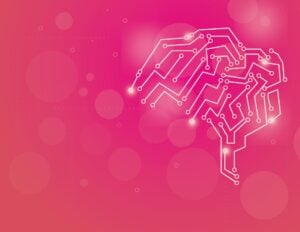
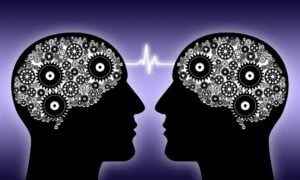
The new reality rejects pedestrian innovation. The machine can distill years of others’ work into a sentence or paragraph with a simple prompt. These models consume the world’s information and attempt to mirror our thinking brain. Once this AI tsunami reaches the shores of our own creative thinking, what becomes of us?
Innovators can no longer rely on the basic, combinatorial solutions they once claimed as their own. Drug discovery achieved by matching research combinations to patient illness profiles, for example, will be performed by machine learning in seconds. These computational, pattern-matching exercises now belong to the machine.
But if we are innovators bound to the creation of the yet-to-be-understood—transformative innovators—then we must train our experience and minds to reach beyond what machines can access. AI lives in combinations of past creations. We must live beyond them.
What AI Actually Does—and Does Not Do
Claude is a remarkable technology that seems to understand our prompts. But it does not—not in any human sense. It is a high-performance, multivariate formula applied to massive datasets, isolating the most probable next word within a learned context, over and over, until it reaches a conclusion. It does not grasp meaning until we program meaning into it. And what is meaning? It is context, environment, and how one ought to feel about a situation. Measurement is the realm of the machine; meaning is the realm of the human.
This distinction aligns with what researchers Fei-Fei Li and John Markoff have described as the gap between narrow AI capability and true contextual understanding—machines can classify and predict, but they cannot mean (Li, F., & Markoff, J., 2017. The Human Element in the Age of AI. MIT Technology Review).
The Power of Human Insight
In my recent book, Unreachable, I commit my thoughts to insight—that “aha” moment that every innovator lives for. But insight without action is merely dreaming. We must build from insight and create scaffolding for others to climb and create further.
Howard Schultz was searching for a way to build a coffee business. He travelled through Europe and discovered that cafés fed a deep desire for community, comfort, and conversation. He found a recipe that no one had invented, took over a small business called Starbucks, and transformed it into a global phenomenon by focusing it on espresso culture. No AI machine could have done it then, nor could one do it now. That insight was born of human experience—of walking those streets, sitting in those cafés, and feeling that pull of belonging.
Cultivating the Conditions for Insight
When I ran a small ten-person innovation team for ten years, I held design sessions every other day for three hours each. It demanded discipline, and the team was not always patient—they had other responsibilities. Yet we created a joyful environment built around comedy, food, and walks. These three elements were deliberate injections into the operational mind, vaccines against routine thinking. The result: we created and launched eight companies over ten years. We also built the scaffolding to ensure our products grew and thrived.
This approach resonates with two leading researchers in the field. Teresa Amabile of Harvard Business School found that intrinsic motivation and a stimulating environment are the most reliable predictors of creative breakthrough—not intelligence, tools, or resources alone (Amabile, T., 1998. How to Kill Creativity. Harvard Business Review).
More recently, Yale psychologist Zorana Ivcevic Pringle has argued that creativity is not an innate gift but a repeated decision—one that anyone can learn to make (Ivcevic Pringle, Z., 2024. The Creativity Choice: The Science of Making Decisions to Turn Ideas into Action. Hachette Book Group). Together, their work affirms that the joyful, disciplined environment we built—comedy, food, walks, and structured ideation—was not accidental; it was precisely the kind of condition that unlocks transformative creative output.
What Is Insight—and Can We Command It?
What, then, is this thing called insight? How do we get it? How do we summon it? Is it within our control? My answer is an absolute yes. In the next installment of this article, I will explore the science and research that underpins that conviction.