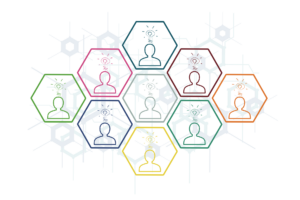
The key is not just hiring top talent with the right work ethic—it is more intrinsic, closer to a personality than a skill. There are four archetypes under what I’ll call a person’s “Natural Wiring”: the Idea Generator, the Problem Solver, the Doer, and the Implementer. Dr. Min Basadur discovered these archetypes while at P&G in the 1970’s and published his work in the 1980’s. My own observations come from building and leading real world product development teams over the past 12 years.
What to Look for When Evaluating a New Hire
When we hire for our innovation teams, there are three critical areas to evaluate:
- Character – A person’s value system, their personal standards, ethics and morals.
- Technical abilities – The items that show up on a person’s resume.
- Natural Wiring – A person’s natural bent towards how they work and what they find enjoyable.
Hiring should be based on someone’s character first, then technical abilities. Although a person’s technical abilities are important, character is paramount. Character is both how a person was raised and their personal choices for how they conduct themselves. Character shows up when a person works hard, is diligent, holds high standards for work quality, and takes ownership. Technical abilities are easy to observe and measure, while character is more difficult to observe. Character is difficult to train; technical ability can be trained, which is why focusing on character is most important.
Natural Wiring: The Overlooked Third Aspect
The third aspect that became apparent to me while building and leading teams is what I call a person’s Natural Wiring, their intrinsic behaviors for how they work and what they like to work on. We might refer to these as a person’s natural bent towards something, much like a person has certain hobbies that they enjoy.
The four archetypes for Natural Wiring are:
- Idea Generator
- Problem Solver
- Doer
- Implementer
The Four Archetypes for Natural Wiring
The Idea Generator has a superpower for coming up with new ideas. They are an idea factory. These are the trailblazers that come up with new solution pathways. They have original thinking and ideas. Their solution to problems is to come up with a brand-new solution versus refine the current solution. They thrive on the unknown and the excitement of what they might discover.
The Problem Solver is the person who harnesses the Idea Generator’s numerous ideas and turns those ideas into reality. They can wrangle complex topics, defining a pathway that translates newfound information into a viable product. They help refine the idea into a practical solution. Both the Idea Generator and Problem Solver work together like hand in glove. The Idea Generator helps the Problem Solver think through potential pathways for refining the solution, while the Problem Solver brainstorms the pitfalls and ideas for improving an existing idea.
The Doer is the person that goes into the lab and executes on the Idea Generator and Problem Solver’s ideas. The Doer usually is low profile, but their superpower is going through the details, thinking through the scenarios, developing a plan, and doing the deep data analysis. Often the Doers receive little credit because they did not come up with the original idea, but they were a critical piece in ensuring that the solution was viable. The Doer brings steadiness and demonstrates the viability of the Idea Generator’s and Problem Solver’s inventions.
The Implementer is the person overseeing the work, directing the outcome. This could be an engineering or technology manager, project manager, or any person that sees the big picture, guiding the team through. Like the Doer, the Implementer has a block-and-tackle mindset, they like to organize the complexities of the work, ensuring the goals and timelines are met. The Implementer knows the direction, the requirements, and ensures that the work aligns with the stated objectives.
What Happens When One Archetype is Missing?
When we pull any one of these archetypes out of the team there is an imbalance that favors the other archetypes. The Idea Generator on their own never launches a product. The Problem Solver optimizes the existing solution. The result is a subpar product, an overdue launch, or a product that lacks technical validation. The most successful teams that I’ve assembled have had a balance of skillsets. Just like in a play, there are main characters and supporting characters, and this is the case with product development teams. Not everyone needs to fit one of these archetypes, some people on your team will be supporting cast members, but they are just as important because they keep the innovation engine functioning as well.
In the next three columns, I will cover the relationship dynamics between each of these Natural Wiring aspects and my observations for how they work together. In column two, I will focus on the front-end innovators, the Idea Generator and Problem Solver. In the third column, I’ll focus on the Doers and Implementers. In the fourth column, I’ll address the team gaps and dynamics when all four are structured and synchronized.
Click here for more columns from Peter Schulz on All Things Innovation.